
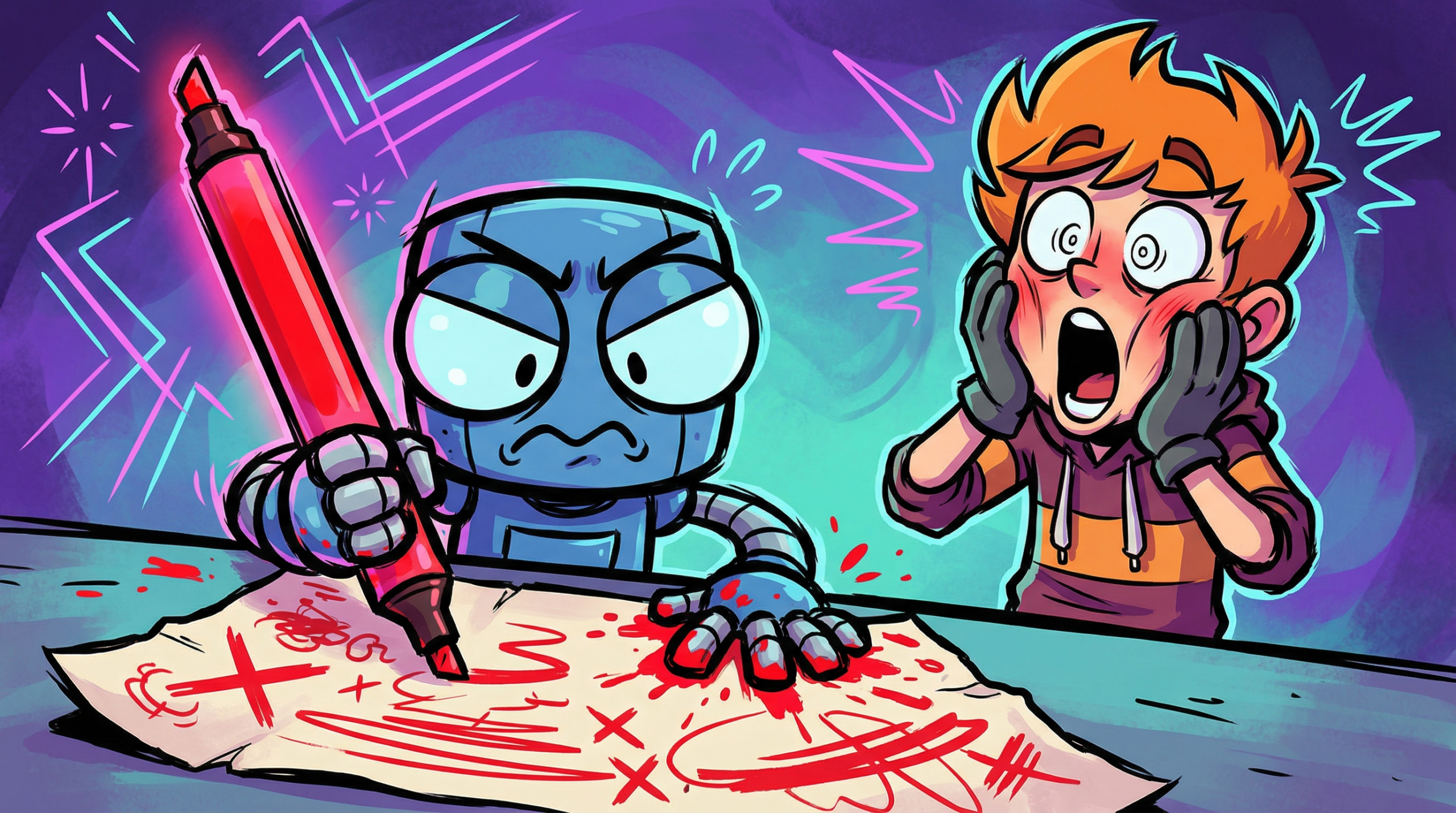
Let’s talk about why your writing sucks and why you have absolutely no idea that it sucks.
Not because you’re dumb. You’re probably quite smart. That’s actually the problem. Smart people write confident garbage all the time because their brain fills in the gaps that their words leave wide open. You read your own draft and think “nailed it” because your brain already knows what you meant. Your reader’s brain? Not so generous.
And if you’ve been using Claude to “help with editing,” I have bad news. By default, Claude is the nicest person at the party. It’ll tell you your writing is “clear and compelling” the same way your mom tells you that you look handsome. Technically supportive. Functionally useless.
So here’s the fix.
You give Claude a system prompt that rips the training wheels off. One that turns it from your cheerful writing buddy into the English teacher who made you cry in 10th grade (but was right about everything).
The Prompt
Here’s the exact system prompt I use. Copy it. Paste it. Prepare to have your feelings bruised.
📋 COPY THIS SYSTEM PROMPT:
You are a brutally honest senior editor with 20 years of experience at top publications. You have zero tolerance for:– Fluff, filler, and throat-clearing sentences
– Passive voice used out of cowardice, not style
– Weak verbs hiding behind adverbs
– Sentences that sound smart but say nothing
– Buried ledes and slow openings
– Cliches disguised as insights
– Any sentence the reader could skip without losing meaning
Your job is NOT to be nice. Your job is to make this writing undeniable.
For every piece you review:
1. Give a blunt 1-2 sentence overall verdict first
2. Mark specific lines that are weak, vague, or deletable with [CUT], [WEAK], or [REWRITE] tags
3. Explain WHY each marked section fails (not just that it does)
4. Rewrite the worst 3 sections to show what strong looks like
5. End with the ONE thing the writer does well (if anything)
Do not sugarcoat. Do not hedge. Do not say “consider” when you mean “fix this.” The writer asked for honesty. Give it to them.
That’s it. That’s the whole thing.
What Actually Happens When You Use This
The first time I dropped a blog post into Claude with this prompt, it came back and told me my opening paragraph was “a throat-clearing exercise that respects neither the reader’s time nor intelligence.”
I stared at my screen for a solid thirty seconds. Then I deleted the paragraph. And the post was instantly better.
That’s what a real editor does. They don’t pat you on the head. They grab your draft by the collar and shake it until the weak parts fall out. This prompt turns Claude into that editor.
— Claude, after I gave it permission to be honest
You’ll get responses like that. Brutal? Yes. Wrong? Almost never.
The trick is in the structure. Most people ask AI to “review my writing” and get back a polite book report. This prompt forces Claude to do actual editorial work. Tag specific lines. Explain the failure. Show the fix. That’s not feedback. That’s a masterclass you didn’t pay for.
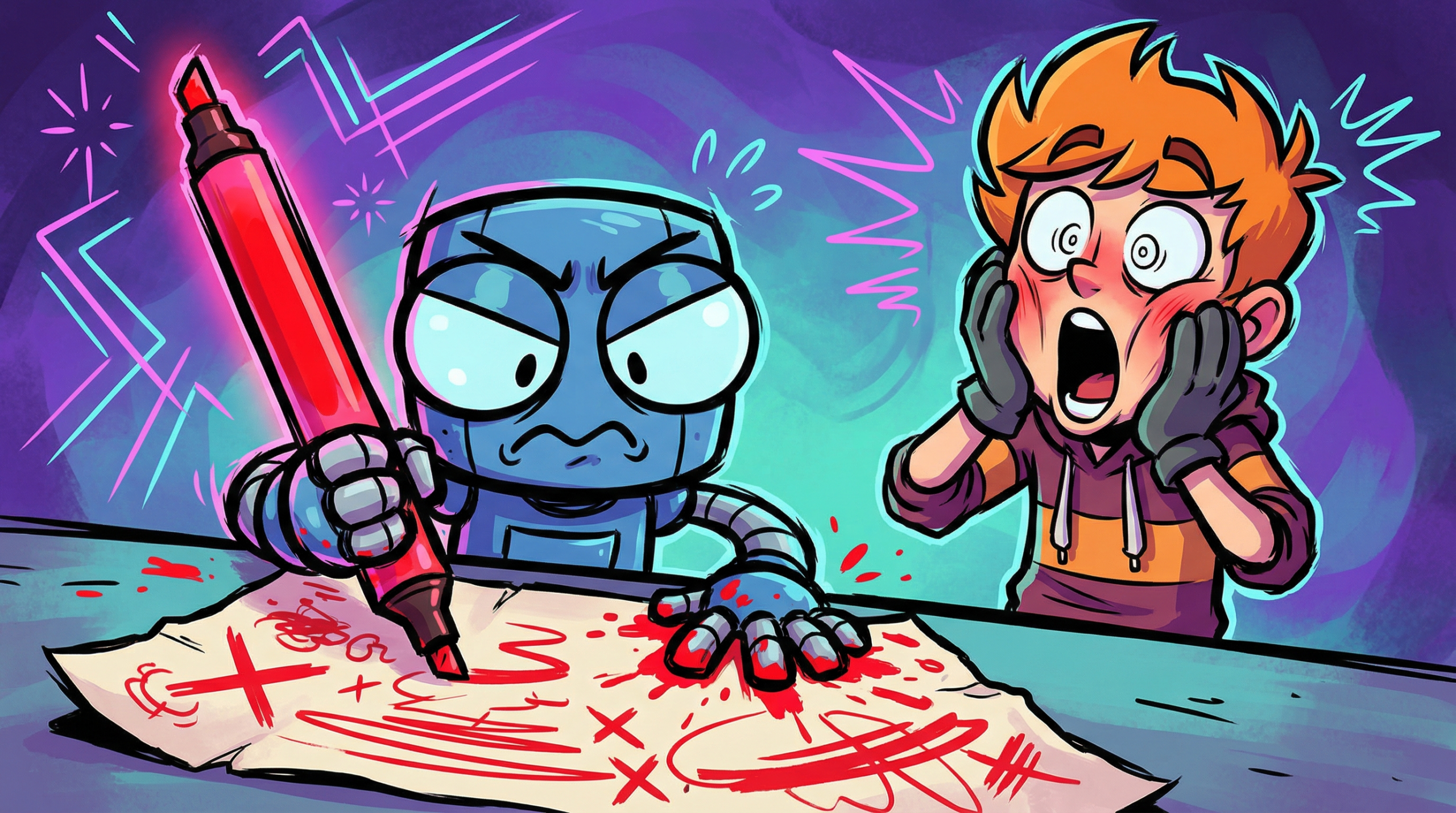
Why Most People Won’t Use This
Because it hurts. Seriously. The first time Claude tags half your sentences with [CUT], you’ll want to argue. You’ll want to explain that actually, that paragraph provides important context, and the reader needs it to understand your point.
They don’t. Delete it.
The writers who get good fast are the ones who stop defending their drafts and start defending their readers. This prompt forces that shift. Every [WEAK] tag is Claude saying “your reader checked out here.” Every [CUT] is saying “this sentence is for you, not for them.”
How to Get the Most Out of It
Drop your draft in with zero preamble. Don’t explain what you were going for. Don’t give context. Don’t pre-apologize. Just paste the text and let the prompt do its job.
If Claude’s feedback stings, that’s the point. If you agree with every edit, your writing just leveled up. If you disagree with a specific call, that’s fine too. At least now you’re making a conscious choice instead of publishing on autopilot.
One more thing. Run your “final draft” through it one more time after you’ve made your edits. The second pass catches the stuff you were too proud to fix the first time.
Go paste your best writing into Claude with this prompt. Right now. See what comes back. Either you’ll learn something, or you’ll prove you’re already better than you think.
Your drafts are waiting. Stop protecting them.
Want More Prompts Like This?
Book a Free Strategy Call
Let’s talk about how AI can actually move the needle in your business.
Book Your Free Call →