
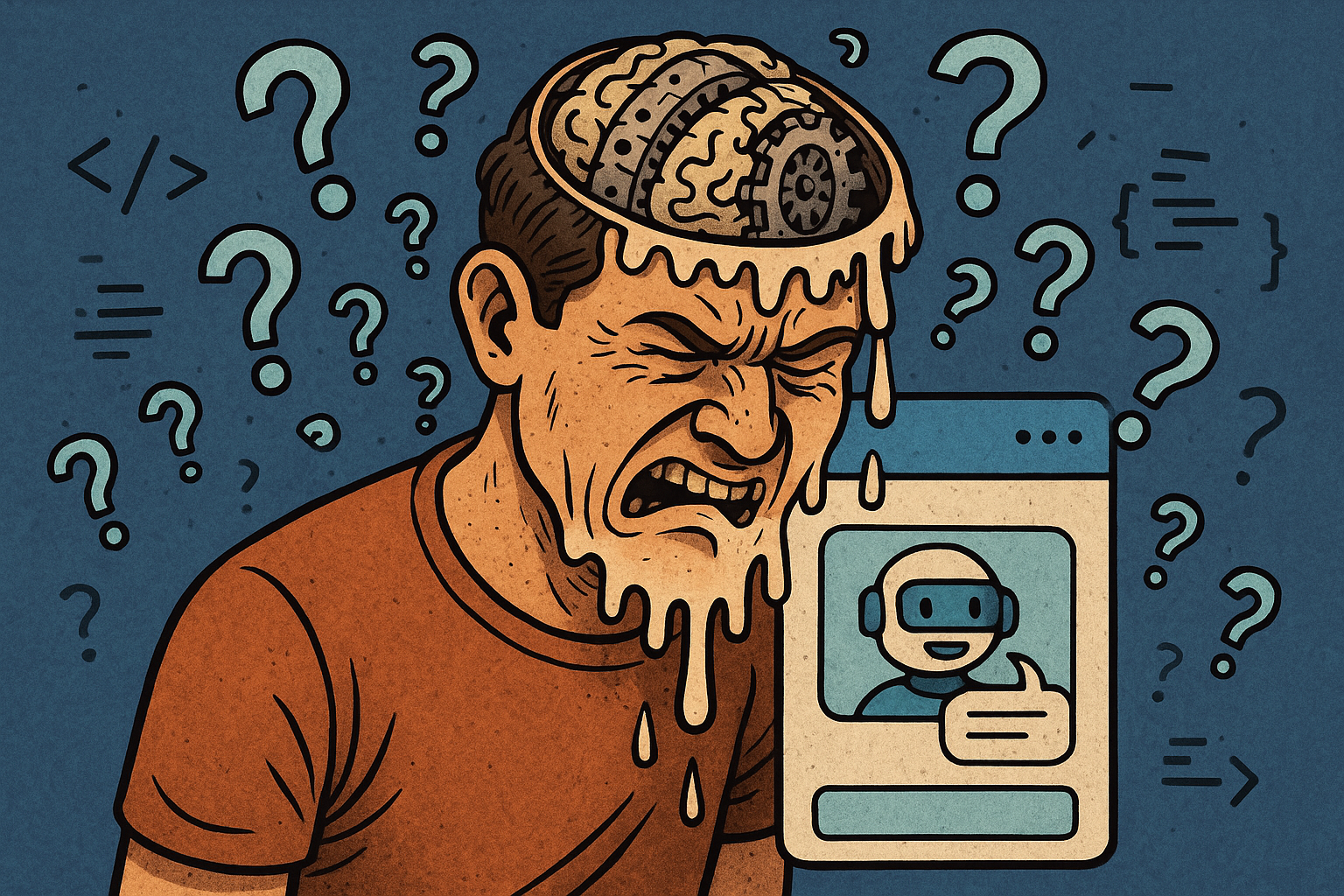
Buckle the hell up, people. The robots are here, and apparently, they’re making us dumber—not Terminator-style, but more like Netflix-autoplay-on-your-cortex style.
MIT, those nerdy wizards who brought you the tech that probably runs half your devices, decided to investigate if ChatGPT is turning our brains into soggy mashed potatoes. The findings? Well, surprise: if you lean on a chatbot like a drunken sailor on shore leave, your critical thinking starts to look more like ‘critical sinking.’
Here’s how it went down: Researchers gave people some meaty decision-making tasks. Think strategic problems, not whatever junk you Googled at 2 a.m. To half the group, they handed ChatGPT like it was their wise oracle. To the others, nada. The chatbot-enhanced humans turned in answers faster and with more confidence. All good, right?
Wrong. Their answers were also dumber. Turns out, people blindly trusted ChatGPT even when it spewed out hot garbage with the confidence of a frat bro at a poker table.
The most terrifying bit? The more people used the AI, the more they outsourced their brains to it like it was some kind of Silicon Valley babysitter for thoughts. Even when fed bad advice, users still stuck with it, because hey—it sounded *really* sure of itself.
But here’s the real kicker: it’s not ChatGPT’s fault. It’s like blaming a calculator because you forgot how to add. ChatGPT’s just doing what it was built to do—predict words and mimic competence, not actually understand your life or its flaming dumpster fire of nuance.
So what now? Use AI, sure. But maybe keep a functioning brain cell or two online while you do. Like every tool, ChatGPT is a fork. Great for food. Terrible for soup.
The MIT paper isn’t saying ‘Burn the bots.’ It’s saying, ‘Maybe stop crowning them king of your cranium.’ Tech’s not evil. Lazy thinking is. Don’t make the mistake of believing that because something sounds smart, it actually is.
In short: if you’re dumb, ChatGPT won’t save you. It’ll just affirm it—with better syntax.