
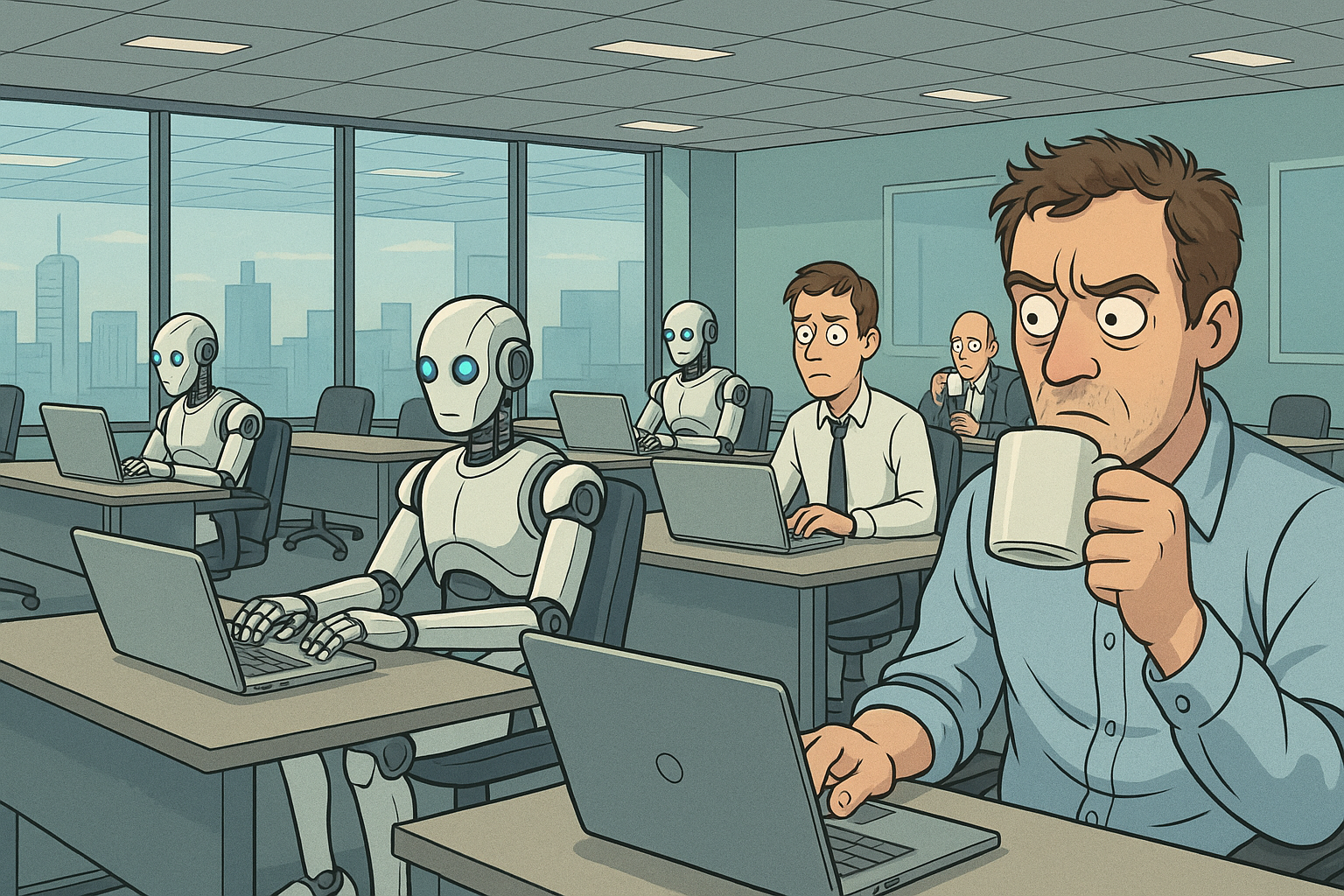
Let’s clear the air: yes, AI might eat your job. But also, it might not. Buckle up, buttercup, because this is going to be a wild, deeply uncomfortable ride into the future.
The internet’s ablaze with hot takes like, “HALF OF ALL JOBS WILL BE GONE BY 2030!” Oh please. Half of all jobs were supposedly going to vanish when the fax machine showed up too. And yet, here we are—as dysfunctional and overworked as ever.
Sure, AI is automating stuff faster than your boss can mispronounce ‘strategic synergy.’ But here’s the unsexy truth: automation isn’t new, and neither is people freaking out about it. We’ve been crying wolf since the Jacquard loom. Spoiler: the wolves never showed up, just new jobs dressed in slightly shinier pants.
What AI is actually doing is killing off jobs that suck—soulless, repetitive tasks that drain your will to live. If anything, AI could free your sorry ass to do something meaningful. Or at least something that doesn’t involve Excel macros. But don’t get too excited—’meaningful’ doesn’t mean you’ll automatically become a dolphin-rescuing poet. It just means you might need to learn a new skill instead of crying into your old resume.
Now, does this mean your job is safe? Hell no. If your job can be done by a glorified autocorrect on steroids, you’re toast. But if your job involves human nuance, creativity, empathy, or convincing toddlers to eat broccoli—robots aren’t quite there yet.
The future isn’t about AI destroying all jobs. It’s about lazy thinking getting replaced. You either evolve, or get comfortably left behind watching reruns of career TikToks about how “money isn’t everything.”
So, is AI going to wipe out half our jobs? Possibly. But more importantly: are you going to be one of the half still getting paid? Or are you about to get unemployed by an algorithm that never takes sick days?
Good luck, champ.